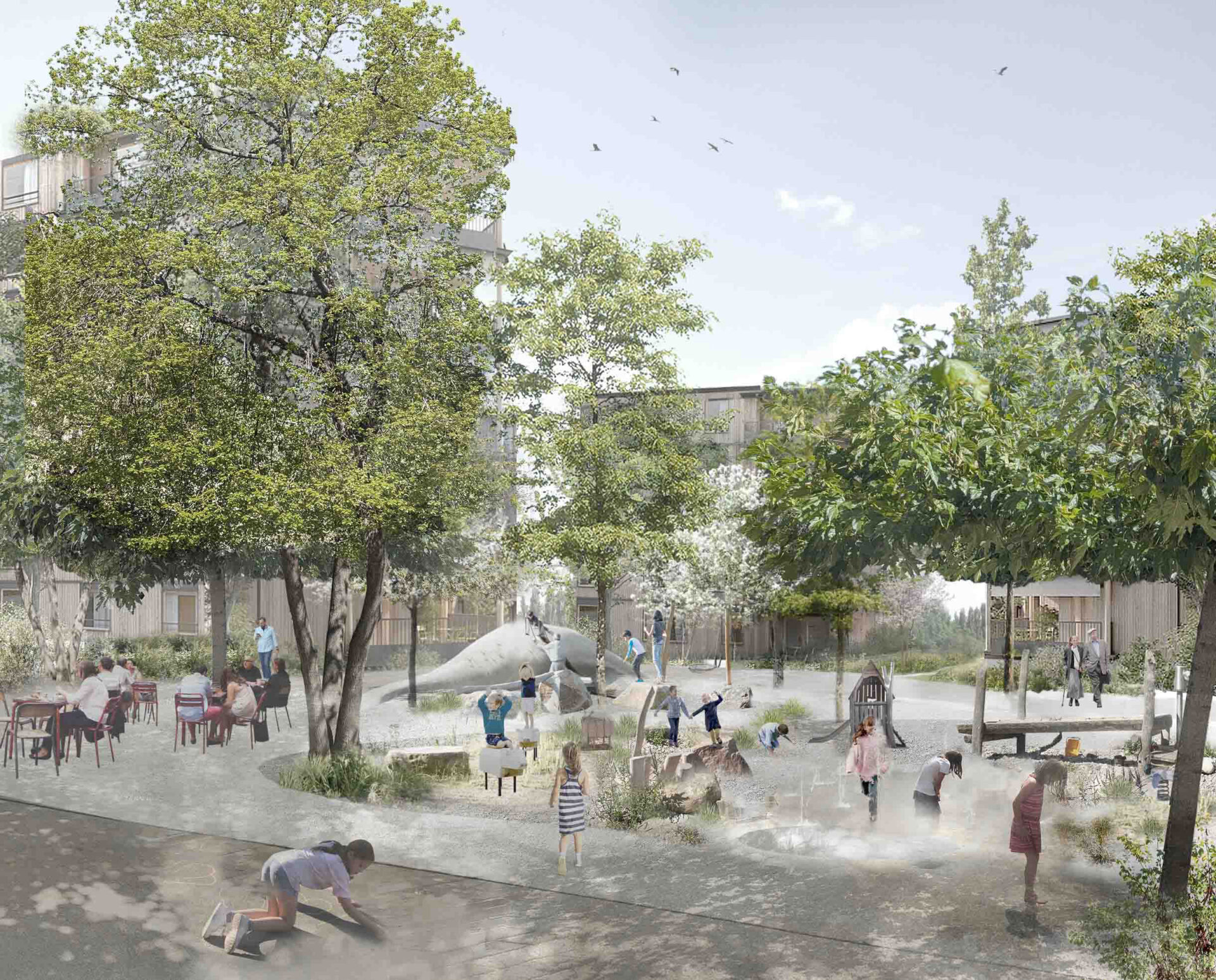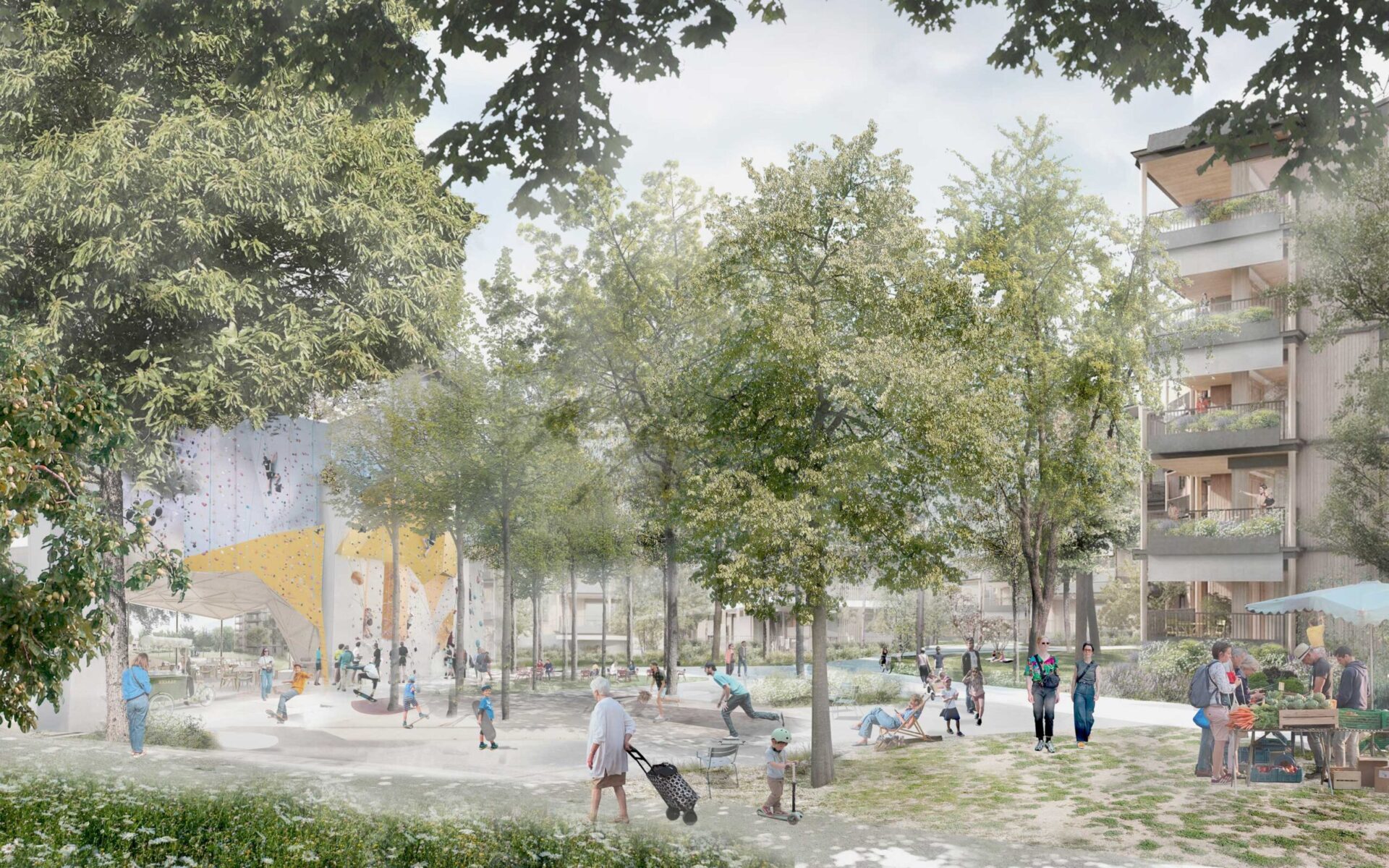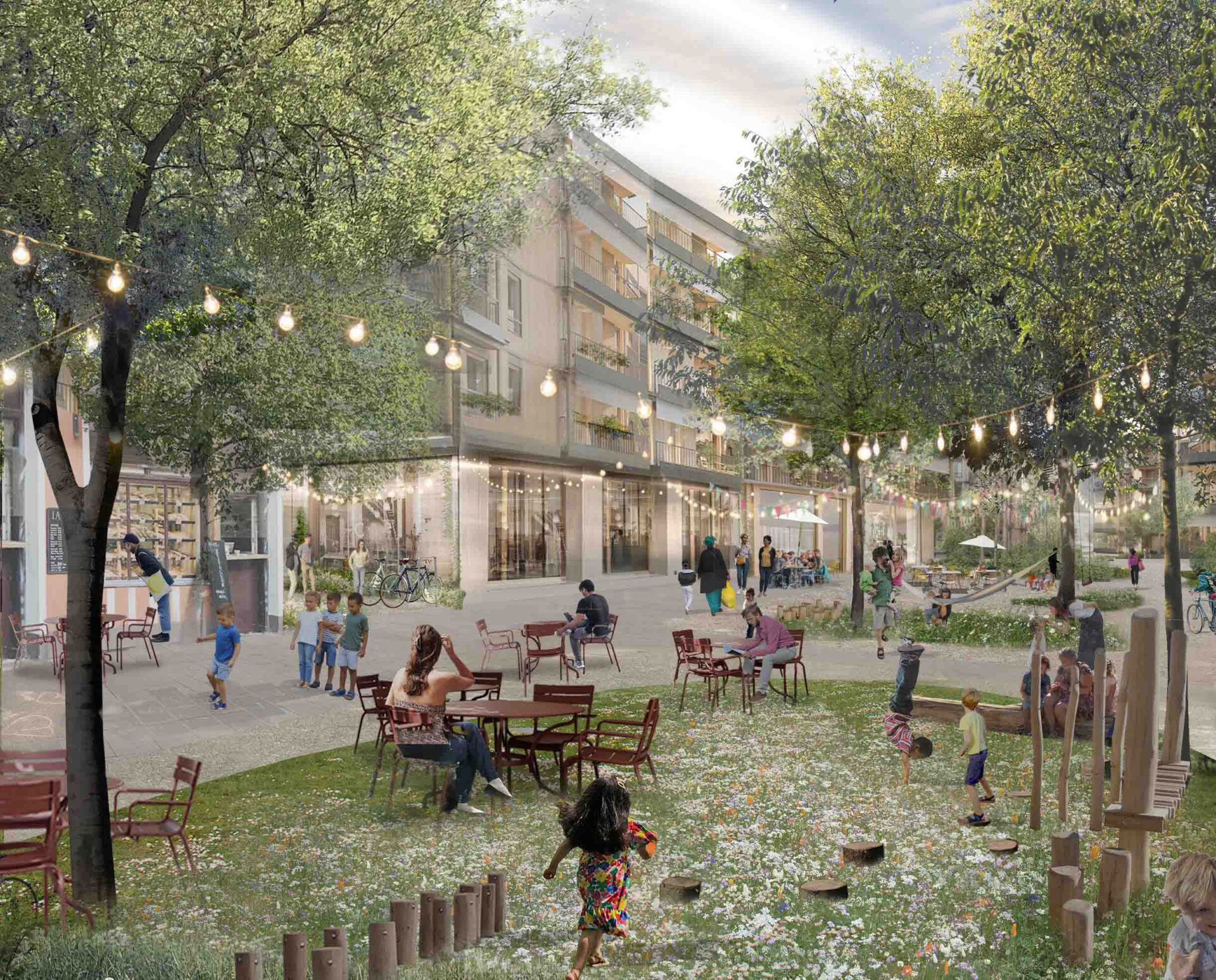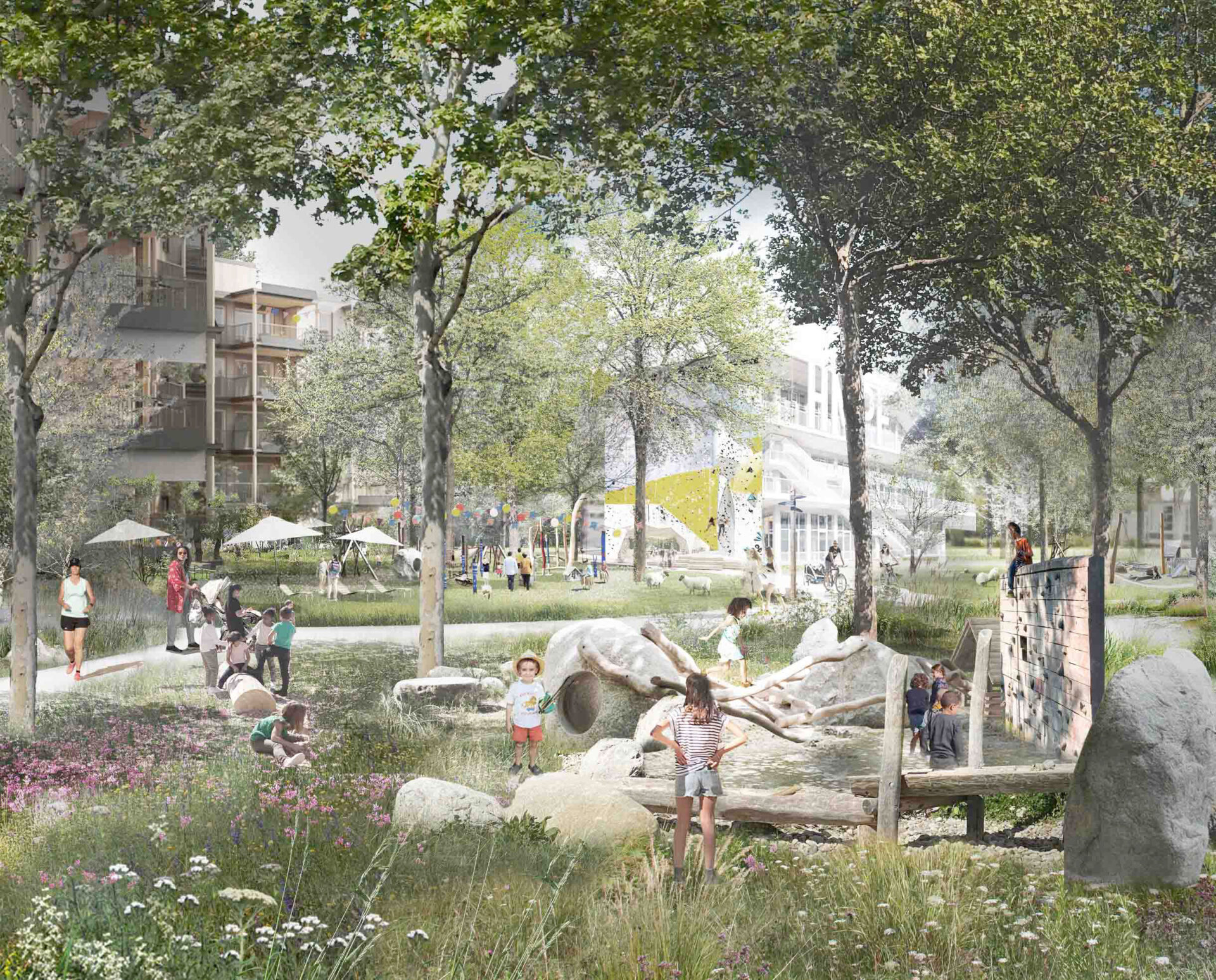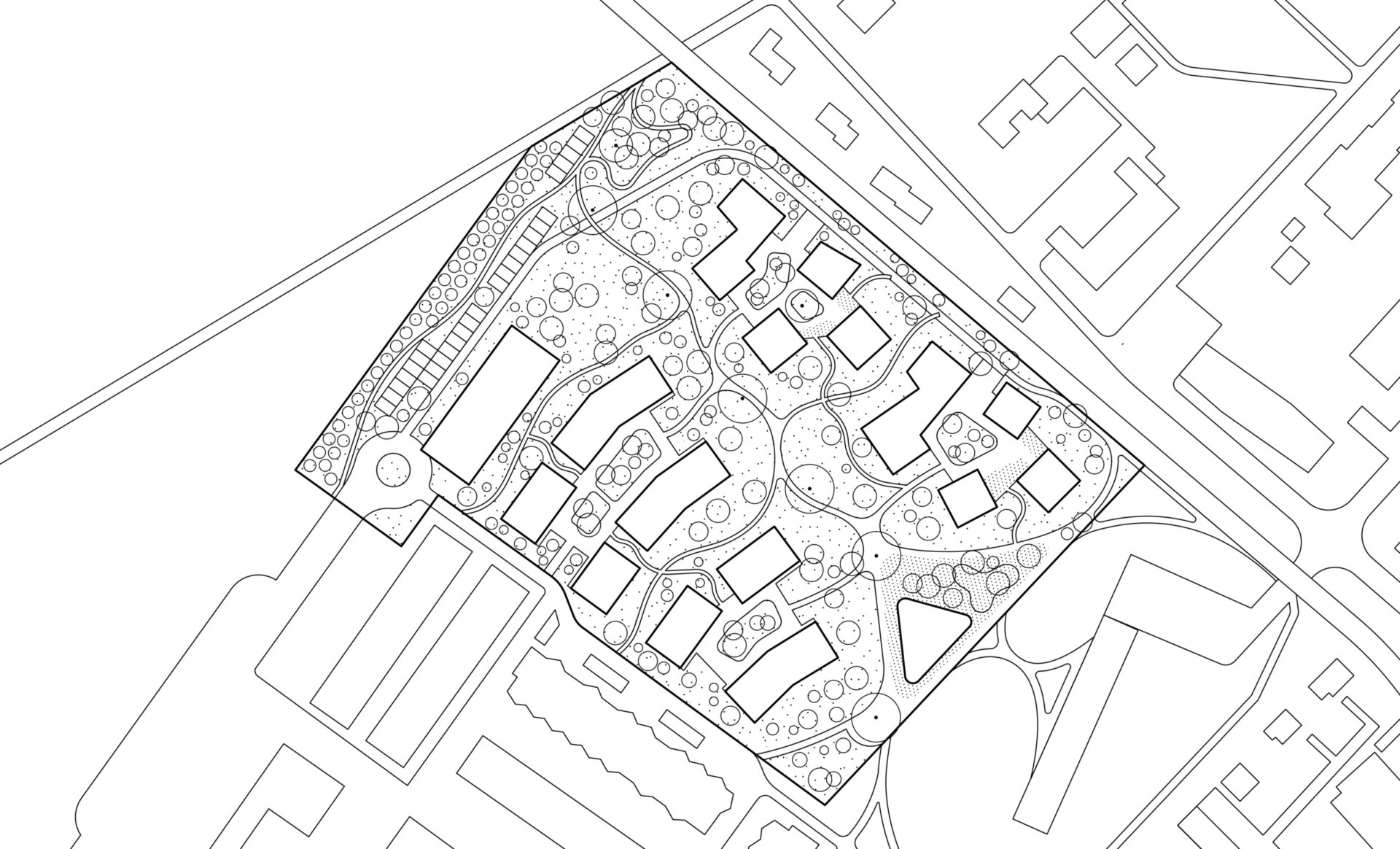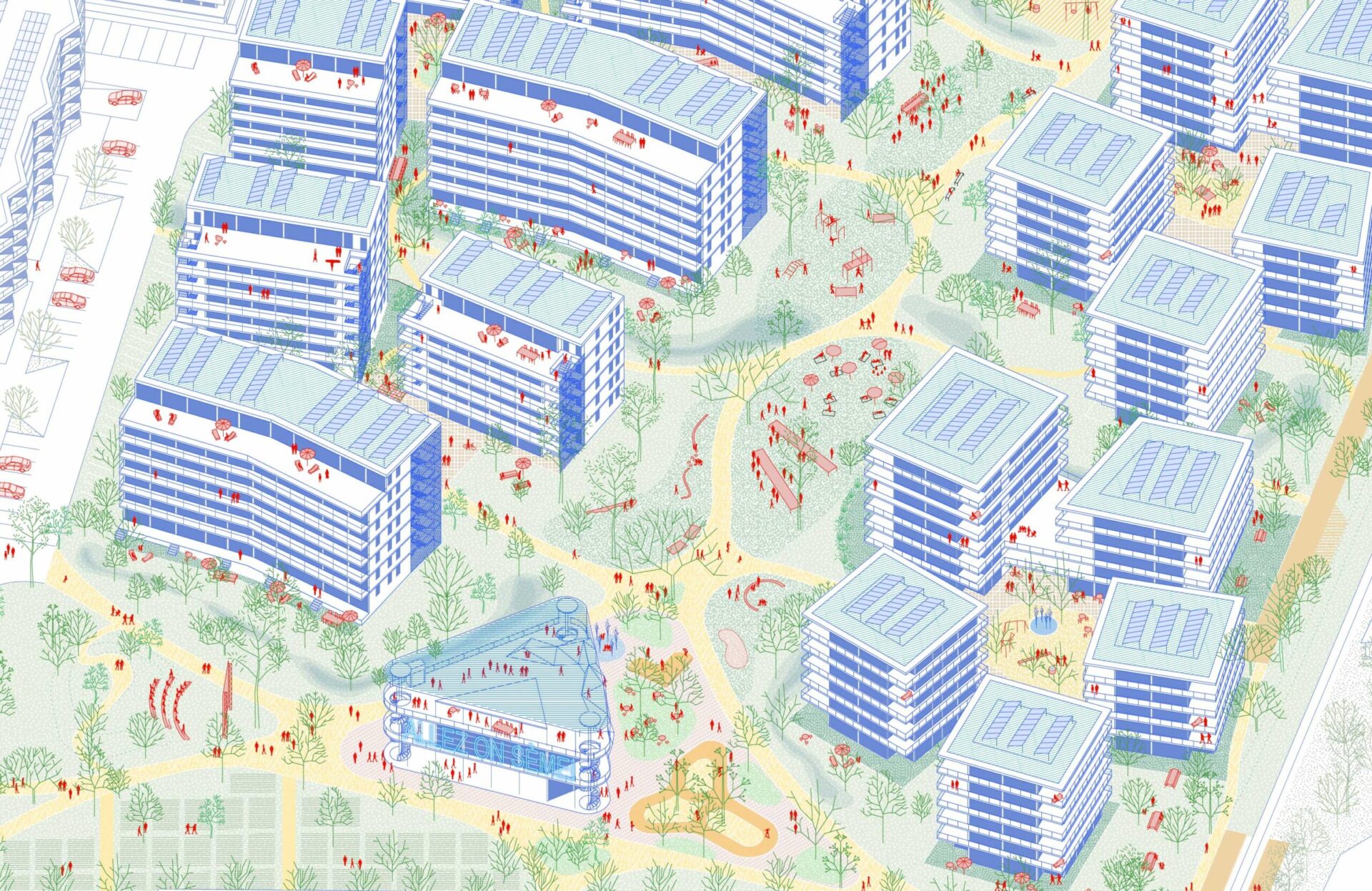
The Petite Prairie III project proposes a new sustainable, inclusive and resilient neighbourhood, conceived as a link between town and countryside. Structured around a large north–south linear park, it develops a true landscape backbone connecting orchards and community gardens to the north with cultural, sports and communal spaces to the south, close to the railway station.
The urban structure is based on two complementary building typologies. To the west, through-block linear buildings maximise natural light, long views and cross-ventilation, while accommodating a high degree of social and intergenerational mix. Active ground floors bring life to the neighbourhood through local shops, cafés, craft workshops, coworking spaces and meeting places. To the east, more compact building clusters offer great typological flexibility and housing units generously open onto the park through loggias and continuous balconies.
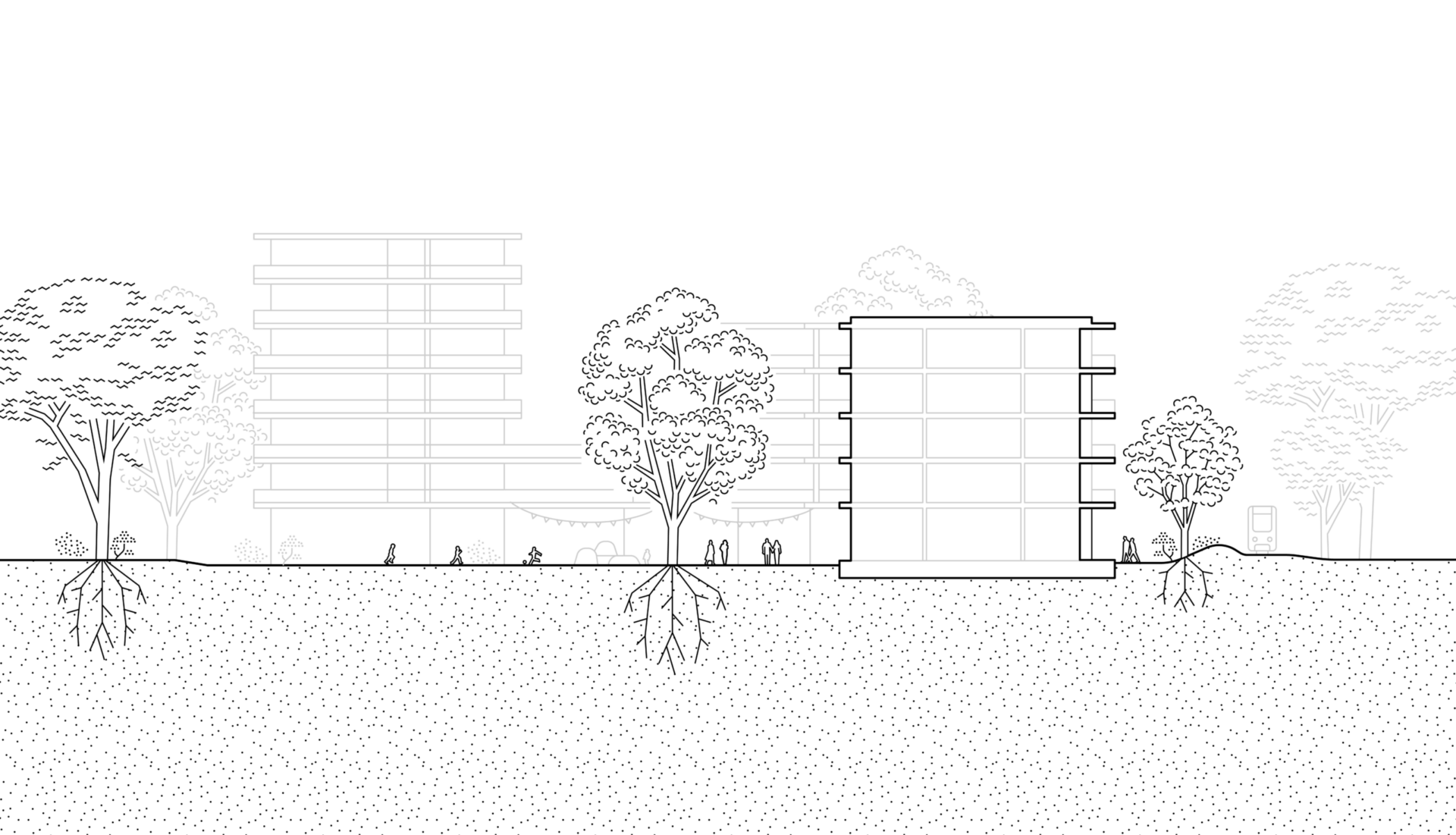
The landscape forms the project’s structural framework. The central park hosts a diversity of environments—flowering meadows, wetlands, groves and landscaped swales—promoting biodiversity and climatic cooling. Water management is handled entirely above ground: green roofs, retention basins, natural infiltration and rainwater harvesting for irrigation. The soil is regarded as a living resource: excavated earth is reused on site to shape the topography and structure public spaces.
Realisation
2025
Client
City of Nyon + Roxbury SA
Procedure
Invited SIA 142 competition
Collaborations
Djurdjevic Architectes
Atelier Corso
BMG
Citec
Services provided
Competition
Location
Nyon (VD)
Surface
40'000sqm