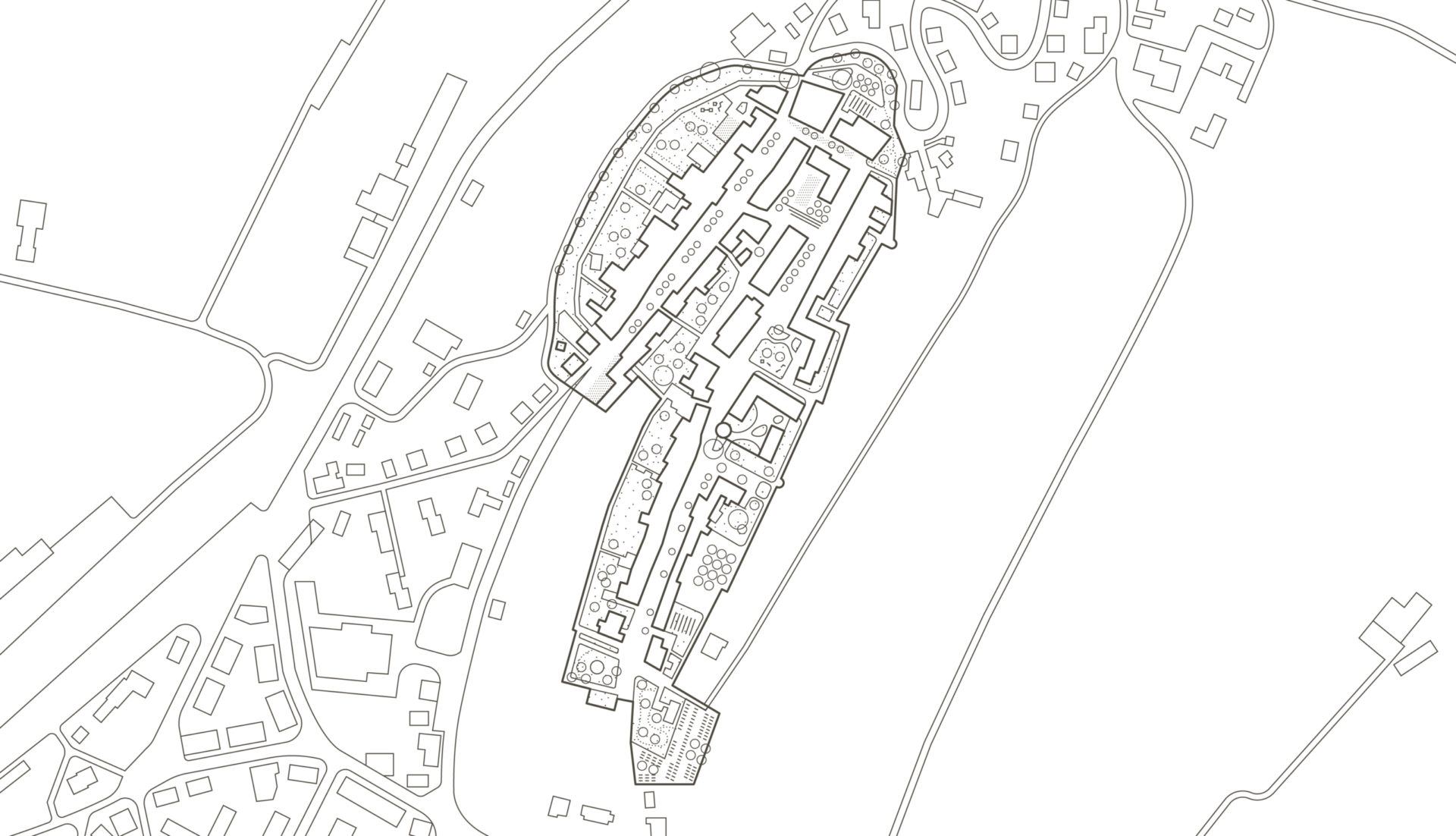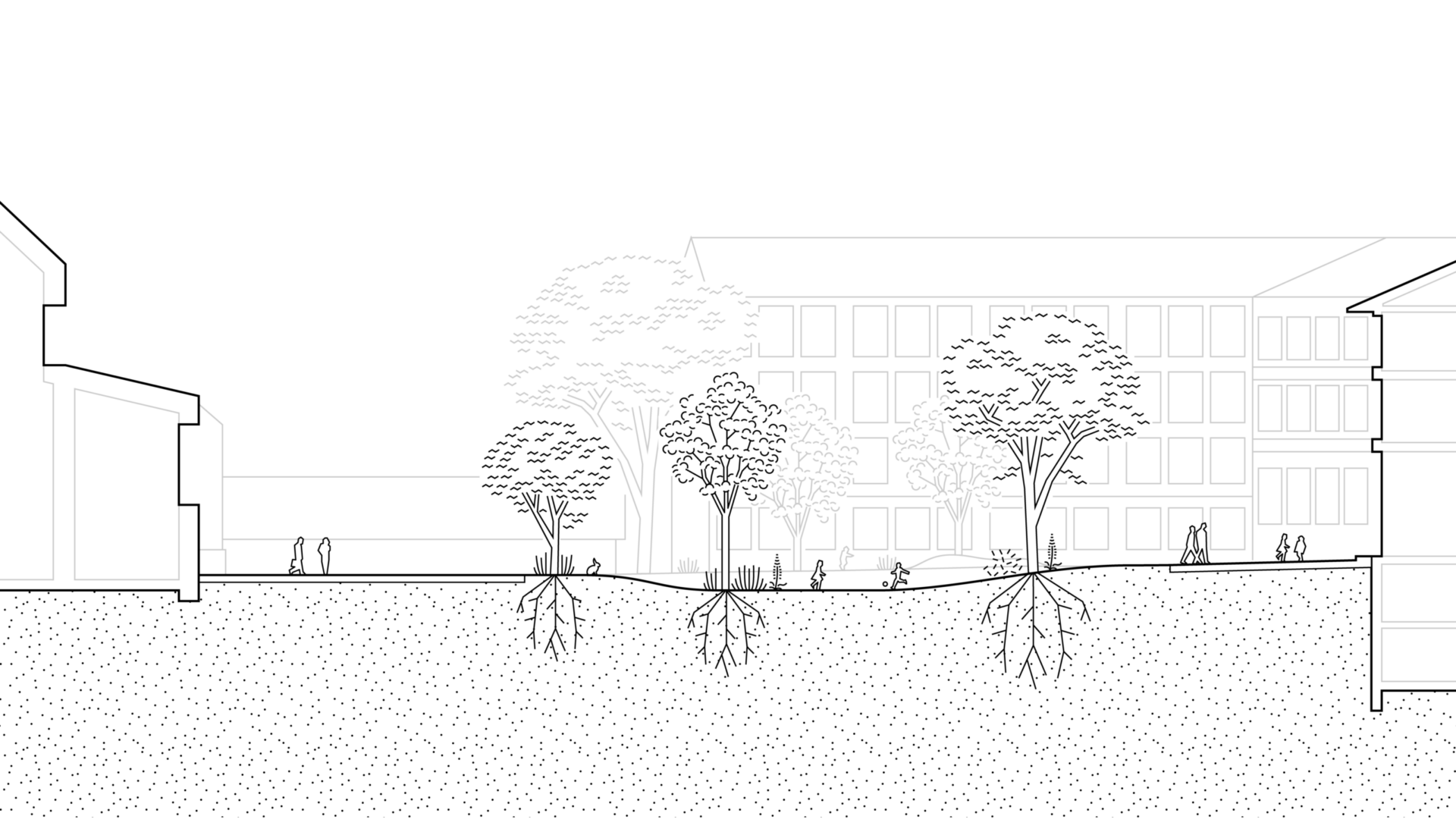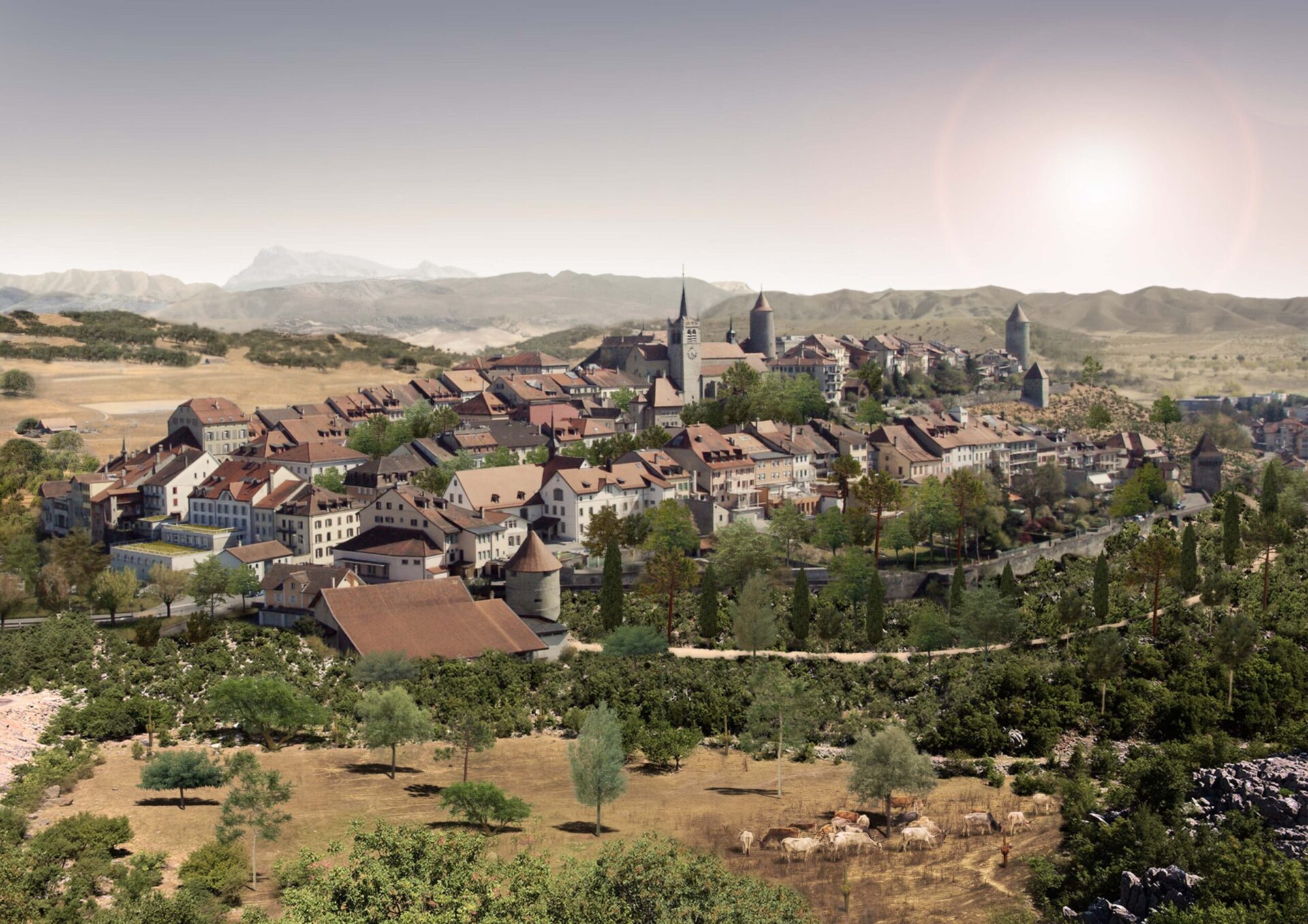
Romont 2050 proposes a long-term vision for the transformation of the historic city’s public spaces, addressing climatic, urban and social challenges. Conceived as a climate refuge, the historic centre is largely returned to pedestrians and embedded within a network of tree-lined spaces linking the ramparts, gardens and the surrounding landscape.
The rampart promenade becomes a cooling ring, punctuated by parks and places for rest and leisure, while the car-free historic core reveals its built heritage and accommodates new uses: terraces, markets, events and social gathering spaces.
Mobility is rethought at the city scale, with a multimodal hub around the railway station, enhanced public transport, and soft mobility connections facilitating access to the historic city. The project also places living soil at its core, conceived as a true climatic infrastructure that ensures permeability, cooling effects and biodiversity.
Romont 2050 thus outlines a calm, vibrant and resilient historic city, prepared to meet the climatic challenges of the future.
Realisation
2023
Client
Municipality of Romont
Procedure
Test Planning
Collaborations
Urbanités
Christe & Gygax
Services provided
SIA 143
Location
Romont (FR)
Surface
122'000sqm