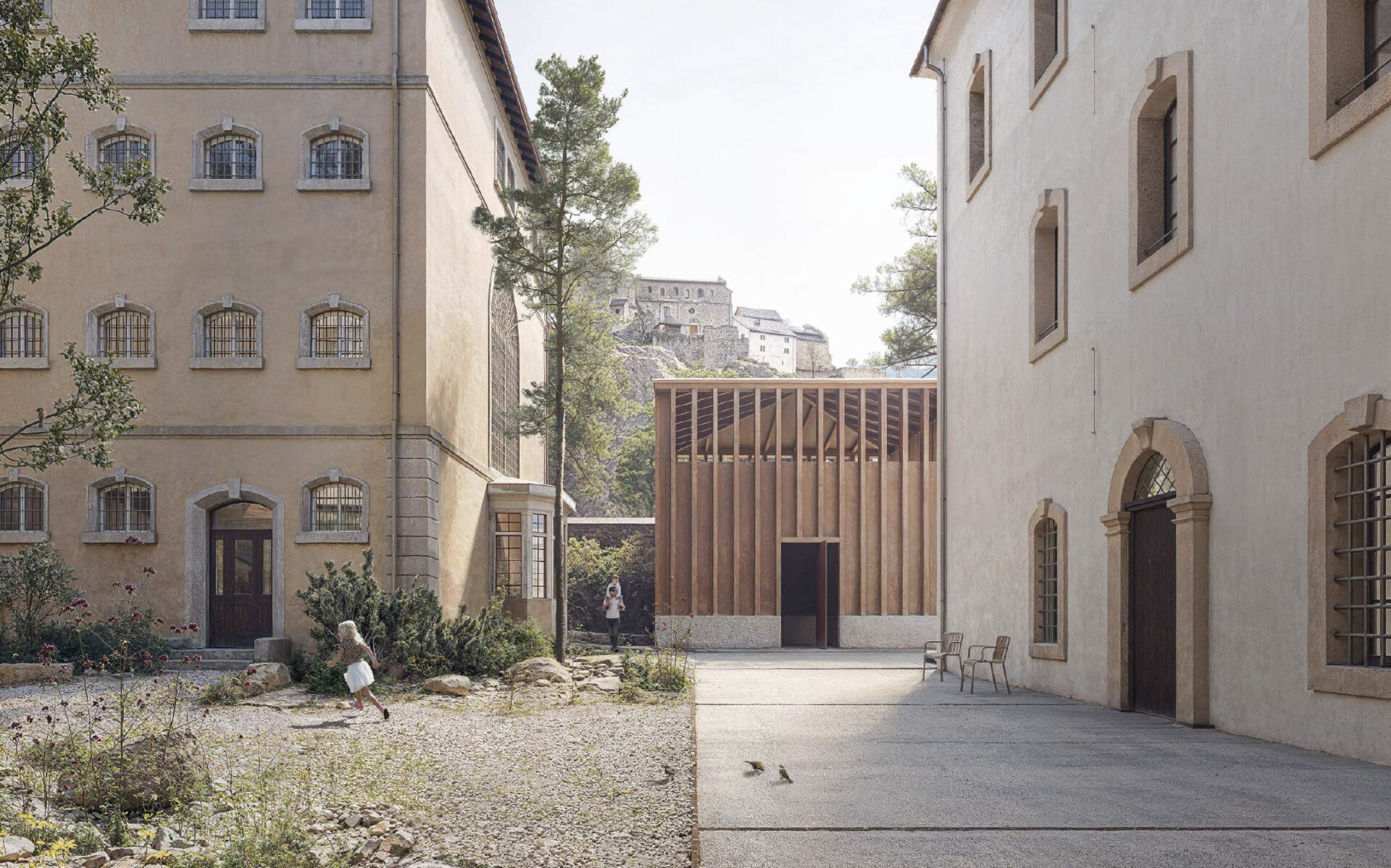
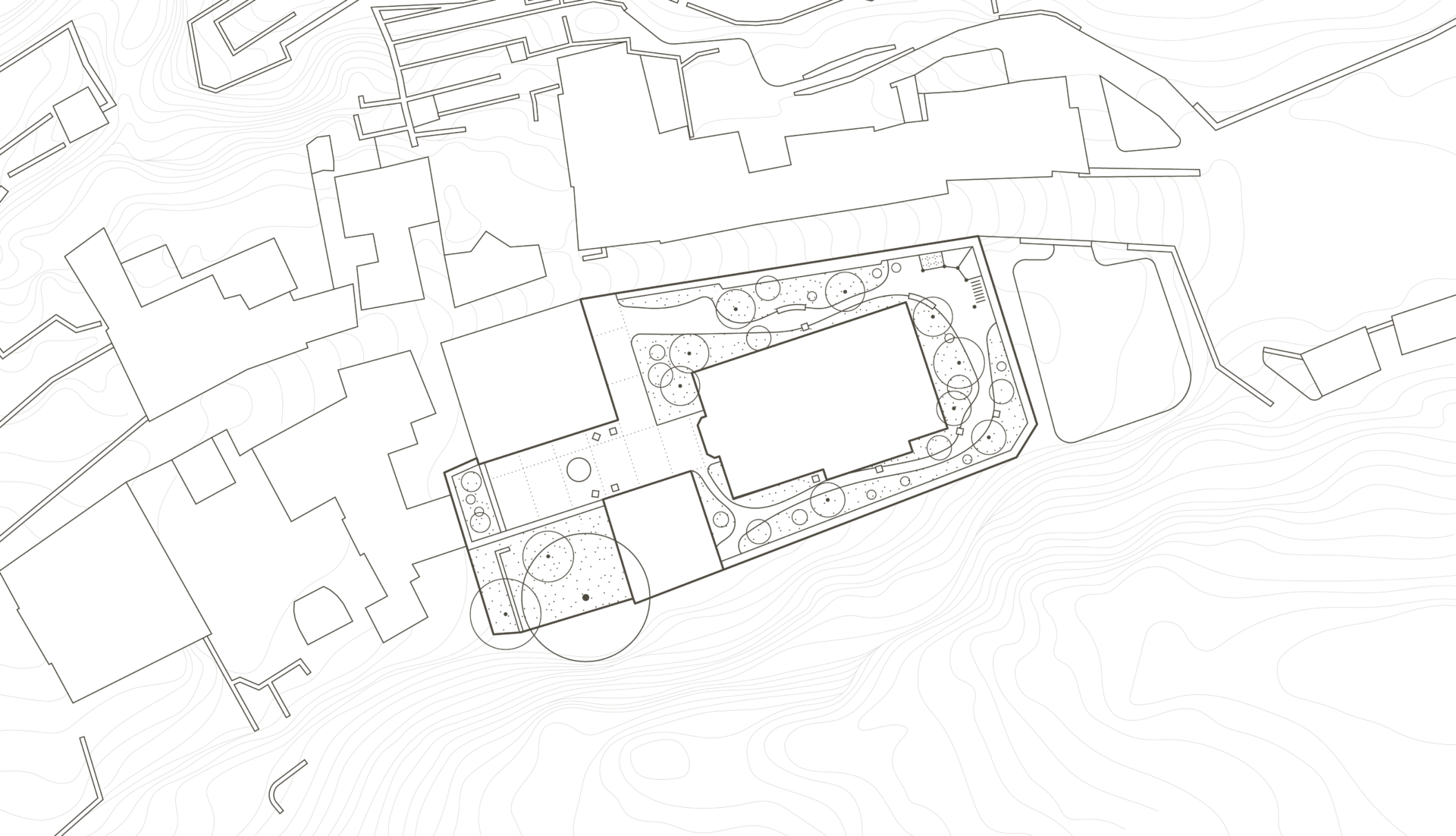
Forecourt: From the gateway on Rue des Châteaux, visitors are visually guided by a wide avenue running alongside the Chancery, leading unambiguously to the Museums’ reception pavilion.
To the west of the new archaeological museum, this avenue widens to form a mineral forecourt inviting visitors to pause. Movable furniture is arranged around a dry fountain with jets—a contemporary interpretation of a symbolic feature of museum forecourts and public squares. Economical in water use, this fountain allows for different, seasonally adapted uses of the space.
Heritage: In this ring-shaped courtyard—separate yet so close to the city—one experiences the daily life of former inmates. Behind the walls, the murmur of free life can be heard: church bells, the laughter of passers-by, the smell of a neighbour’s simmering meal. Yet perception inside the enclosure is different, suspended in time. Suddenly cut off from the rest of the city, one instinctively looks upward—the wall calls for escape.
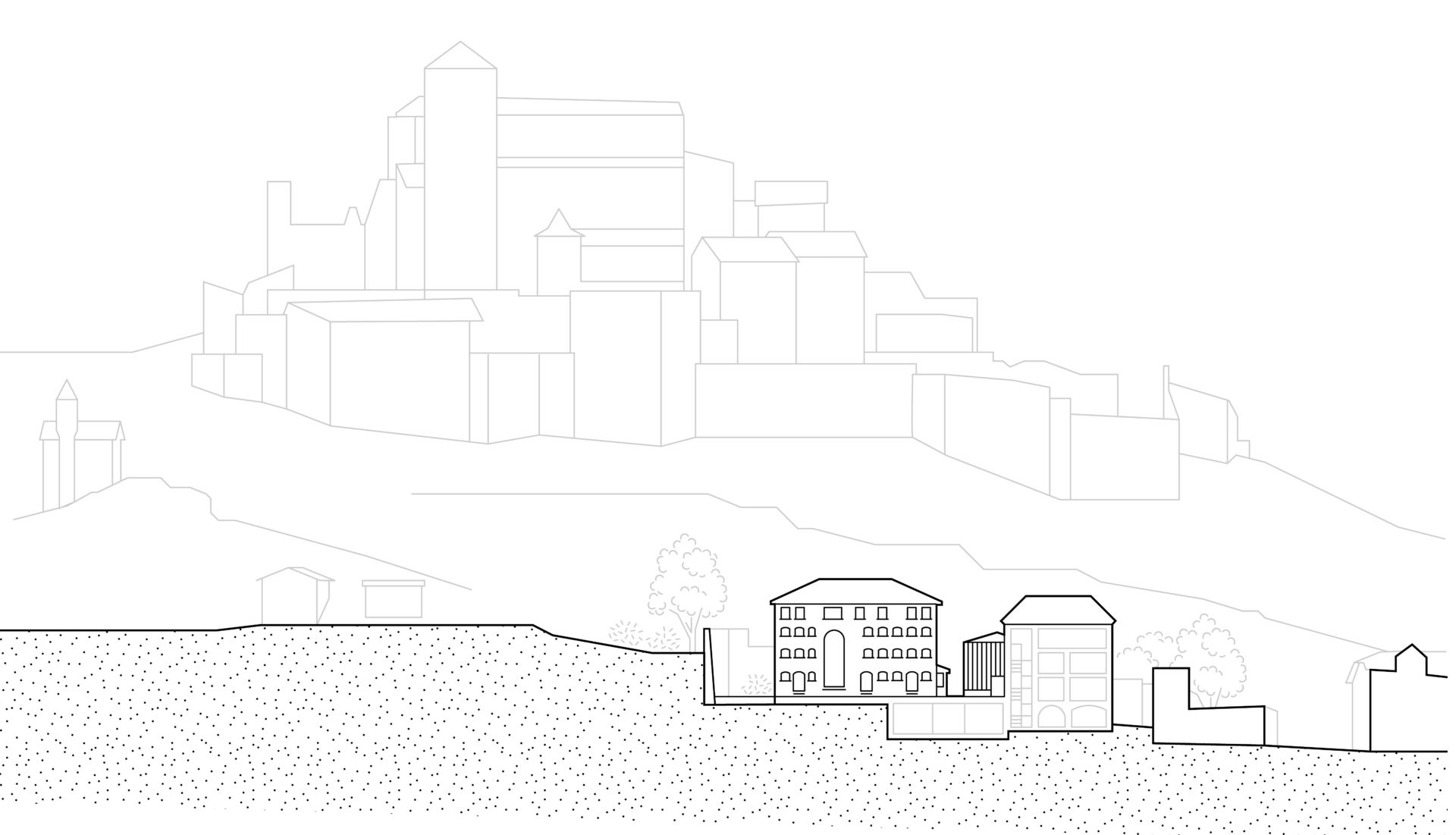
Contemplation: Behind the wall lies a pristine, peaceful garden. On the rocky slope, a horse chestnut stands at the heart of this secret garden. The intact and flourishing atmosphere of the vegetation encourages the enhancement of the contemplative function of this space. From the forecourt, an opening overlooks the garden, offering a glimpse of an inaccessible Eden.
Botany: The remarkable flora of the hills of Sion is celebrated through a scenography of native species. Reflecting the diversity of natural environments of the Hauts Valais, the biotopes we recreate arise from the morphology of this interstitial space and the varied conditions of light and humidity it offers: planting on slabs (dry, rocky zones with limited water retention); areas along the cliff of the Valère Basilica; shaded zones and runoff water collection; fertile in-ground areas (woodland and meadow); and rainwater from rooftops forming ponds and wet zones. Complementary to the Nature Museum, the educational trail around the Penitentiary guides visitors through the discovery of different environments, atmospheres and scents—all drawn from the surrounding territory, like a condensed naturalist journey.
The Wall Experience: Aware of the site’s appeal to families, the design includes a play area for children of all ages. Making use of the strong physical presence of the high vertical enclosure wall, a playful route is created along the eastern wall. Multiple levels of difficulty are offered: from intertwined logs and nets for younger children to climbing holds fixed directly into the rubble-stone wall, providing an introduction to climbing for older visitors. As the Penitentiary enclosure remains permanently open to the public, this dynamic and original play area will help make the site a popular destination for families in Sion.